Reproduction
Re-execute the reported work using the supplied artifact or a reconstructed equivalent, recording material deviations.
See how VRL turns a research claim and its artifacts into a traceable, bounded conclusion.
The claim, decision, test conditions, and tolerances are fixed before we examine the result.
Re-execute the reported work using the supplied artifact or a reconstructed equivalent, recording material deviations.
Test the same claim with an independently constructed implementation, dataset, or experimental design.
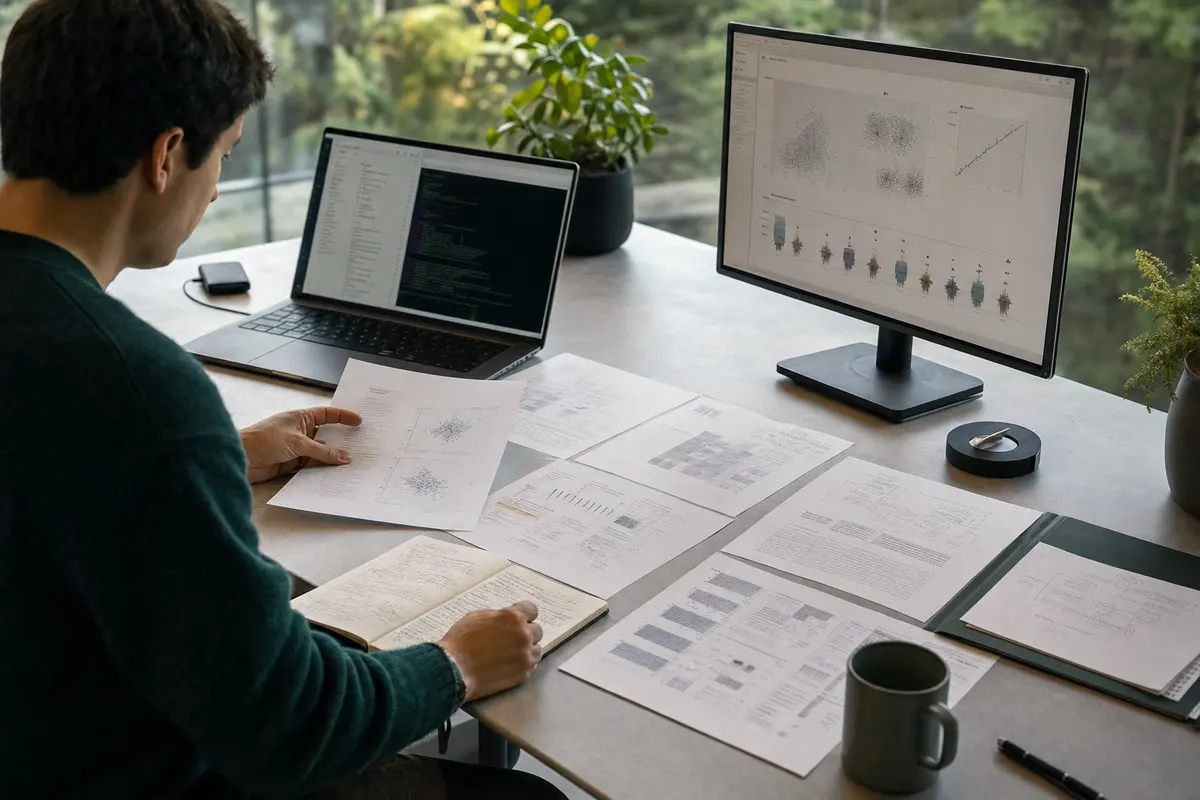
The paper or claim, available artifacts, expected results, access constraints, and the decision or publication context.
Before execution, the test plan records claims, conditions, tolerances, exclusions, publication terms, and how assistance will be logged.
The subject may correct factual errors and submit a response. The method and conclusion remain under independent control.
Evaluation stages
You identify the result or decision that matters. We turn it into a testable statement and agree on what would count as support, failure, or an inconclusive result.
You provide the available paper, repository, data, environment, and access constraints. We record what was received and preserve the versions used.
We first work from the supplied instructions. Requests for assistance and material deviations are logged so the record shows what an independent evaluator could and could not do.
The review follows the evidence behind the claim, including comparison choices that may make a reported advantage appear stronger or weaker.
Sensitivity tests are selected for their ability to change the conclusion, not to produce a larger volume of experiments.
You receive a conclusion tied to the tested conditions, with unresolved questions and the circumstances that would require revalidation.
Labels describe completed work at claim level. They do not grade a whole paper or replace the report's stated limits.
Have a specific claim?