For research
Validate a result before others rely on it
Prepare for submission, strengthen an artifact, examine a benchmark, or commission an independent public record.
Explore research servicesVerified Research Lab independently tests published and pre-publication work in computer systems and software. We turn papers, artifacts, and technical claims into bounded evidence you can use.
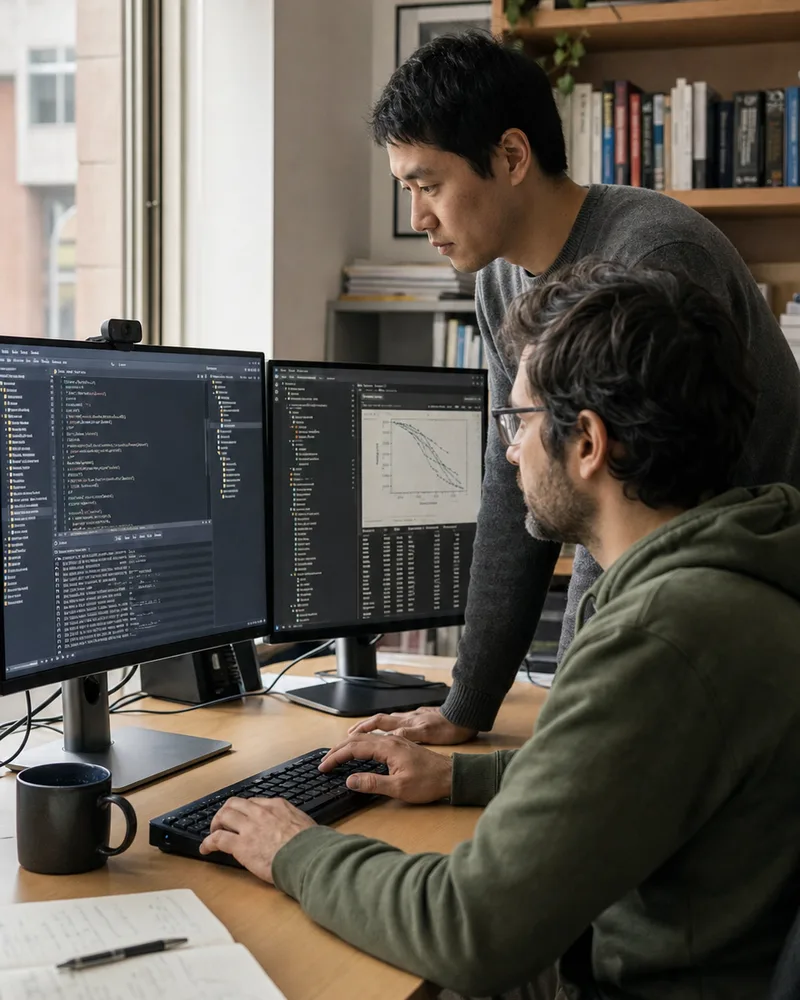
Choose your starting point
For research
Prepare for submission, strengthen an artifact, examine a benchmark, or commission an independent public record.
Explore research servicesFor decisions
Examine whether a claimed advantage survives independent execution before funding, acquisition, procurement, or adoption.
Explore technical due diligenceWhen to involve VRL
The claims, materials, environments, deviations, and observed results.
What reproduced, what replicated, what failed, and what remains uncertain.
Methods, evidence, limitations, responses, and correction history in one citable record.
How an engagement works
We review the claim, available materials, access constraints, conflicts, and timing.
We agree on the exact question, conditions, tolerances, reporting format, and publication terms.
We reconstruct, rerun, vary, and document the work without sponsor control over the method or finding.
You receive the test record, observed result, material limits, and remaining uncertainty.